You heard someone say habibti and it stopped you mid-conversation. Maybe it was in a song, a TV show, or someone whispered it to you and you weren’t sure how to feel about it. Was it romantic? Was it casual? You just needed a straight answer — and somehow every search led you in circles.
That’s exactly why this post exists. We’re going to break down the habibti meaning in arabic clearly and simply — no fluff, no confusion. You’ll learn where it comes from, how it’s used, who says it and why, and whether it’s something sweet or just an everyday expression. By the end, you’ll know this word like you’ve spoken Arabic your whole life.
What Does Habibti Mean in Arabic?
If you’ve been searching for the habibti meaning in arabic, the simple answer is “my beloved” or “my dear” when talking to a female. The word comes from the Arabic language and people commonly use it as a warm and affectionate expression. In Arabic script, habibti is written as حبيبتي. It’s one of the most popular Arabic terms of endearment used across the Middle East and many Muslim communities worldwide.
The pronunciation of habibti sounds like “ha-bib-TEE.” The word “habibi” is used for males while “habibti” is the feminine form used for females. Many people also translate it as “my love in Arabic” because it carries emotional warmth and affection. Here’s a quick comparison:
| Word | Gender | Meaning |
| Habibi | Male | My beloved |
| Habibti | Female | My beloved |
Where Does Habibti Come From?
The habibti arabic word comes from the Arabic root letters ح-ب-ب (H-B-B), which relate to love, care, and affection. This same root creates the word “hubb” (حب), meaning love. Arabic uses root systems to build many connected words, so habibti shares linguistic ties with words connected to emotions and relationships. That’s why the term feels deeply personal and emotional in conversation.
The word “Habib” means beloved or loved one. When Arabs add the feminine ending and possessive tone, it becomes “Habibti,” meaning “my beloved” for a female. Arabic gender in language plays a big role here because masculine and feminine forms often change slightly. You may also hear this word in religious or poetic contexts since love and compassion are important themes in Arabic literature and Islamic culture.
Habibti Meaning in English — Multiple Translations
The habibti meaning in english does not have just one exact translation because the word carries emotion, affection, and cultural warmth. In most situations, people translate habibti as “my love,” “my dear,” “my darling,” or “sweetheart.” The word comes from the Arabic term “habib,” which means beloved or loved one. When someone adds the feminine ending, it becomes “habibti,” a loving expression used for females. Arabs commonly use this word in daily conversations to show care, closeness, and emotional connection.
Many people searching for the habibti meaning in arabic are surprised to learn that the word can sound romantic, friendly, or even family-oriented depending on the situation. For example, a husband may call his wife habibti during a loving conversation while a mother may lovingly say habibti to her daughter. In some Arab countries, female friends also use the word casually with each other. That’s why direct English translations sometimes fail to capture the emotional tone behind the expression.
Another important detail is that Arabic affection words often carry stronger emotional meaning than their English equivalents. In English, words like “dear” or “sweetheart” may sound ordinary. However, habibti often feels warmer and more personal because Arabic culture naturally uses affectionate language more openly in conversations. This emotional depth makes the word memorable even for non-Arabic speakers who hear it in songs, movies, or social media videos.
The exact translation also changes based on tone and context. If someone says habibti softly during a romantic moment, it usually means “my love.” In a caring family conversation, it may simply mean “my dear.” Younger people online sometimes use habibti playfully with friends in chats or captions. Because of these different uses, many language experts describe habibti as a flexible Arabic term of endearment rather than a word with only one strict meaning.
Habibti Meaning in Urdu
The habibti meaning in urdu is commonly translated as “میری پیاری,” “میری جان,” or “میری محبوبہ.” All of these phrases express love, affection, emotional attachment, and closeness. Urdu speakers usually understand the emotional tone of habibti very quickly because Urdu contains thousands of Arabic and Persian-origin words. Due to this shared linguistic history, the word feels familiar and natural to many Pakistani and Indian readers even if they do not speak Arabic fluently.
In Urdu-speaking cultures, words showing affection are very common in family and relationship conversations. That’s one reason why habibti connects emotionally with South Asian audiences. The word sounds soft, caring, and respectful at the same time. Many people associate it with romance because they often hear it in Arabic songs, Islamic videos, Turkish dramas, or Middle Eastern social media content. Over time, the expression has become recognizable far beyond Arab countries.
Social media has also played a major role in popularizing habibti among Urdu speakers. Platforms like TikTok, Instagram, and YouTube frequently feature Arabic phrases in romantic edits, captions, and viral videos. As a result, many young Pakistanis search for terms like habibti meaning in english or habibti meaning in urdu to understand the exact emotional meaning behind the word. Some even start using it casually with close friends or partners online.
Another reason the word feels relatable is the cultural similarity between Arabic and Urdu expressions of love and respect. In both cultures, affectionate language is often used to strengthen emotional bonds within families and relationships. That’s why habibti does not always sound overly romantic. Depending on the tone, it can also mean “my dear,” “my lovely one,” or “someone close to my heart.” This flexibility makes the word emotionally rich and widely appreciated across different cultures.
Habibi vs Habibti — What’s the Difference?
Many beginners get confused between habibi and habibti because both words come from the same Arabic root connected to love and affection. The main difference is gender. In Arabic grammar, words often change depending on whether you are speaking to a male or a female. “Habibi” is the masculine form while “habibti” is the feminine form. Both words mean “my beloved” or “my dear,” but they are directed toward different genders.
Here’s a simple comparison to understand it better:
| Word | Used For | Meaning |
| Habibi | Male | My beloved / my dear |
| Habibti | Female | My beloved / my dear |
Arabic speakers use these terms naturally in daily life. You may hear:
- A wife calling her husband “habibi”
- A husband calling his wife “habibti”
- Parents using the words lovingly for children
- Friends using them casually in conversation
The difference becomes important because Arabic gender in language is deeply built into grammar and communication. Unlike English, Arabic changes many words depending on masculine or feminine use. That’s why using habibti for a female sounds correct while using habibi for a male sounds natural.
However, spoken Arabic is not always strict. In some countries, especially Egypt and Lebanon, people sometimes bend these rules casually in jokes, songs, or playful speech. For example, close female friends may jokingly call each other habibi instead of habibti. Social media has also made these expressions more flexible among younger generations. Still, if you want to speak correctly and respectfully, it’s best to remember:
- Habibi = male
- Habibti = female
Another common question people ask is: can a man say habibti? The answer is yes, but only when speaking to a woman or girl. Similarly, women say habibi when addressing men. Understanding this small difference helps you sound more natural and culturally aware when using Arabic affection words.
Is Habibti Romantic or Just Friendly?
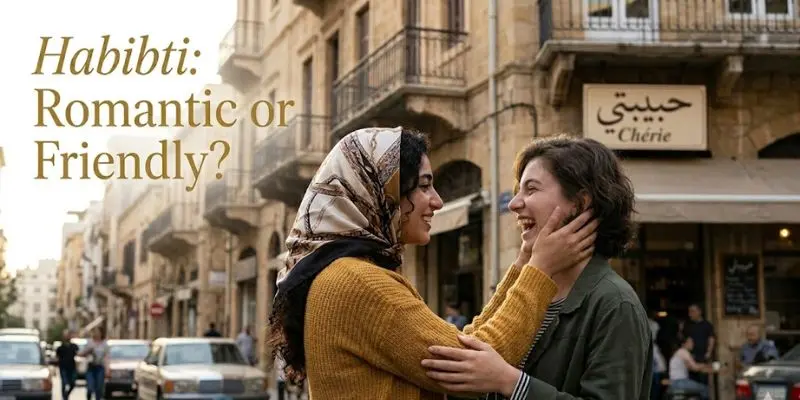
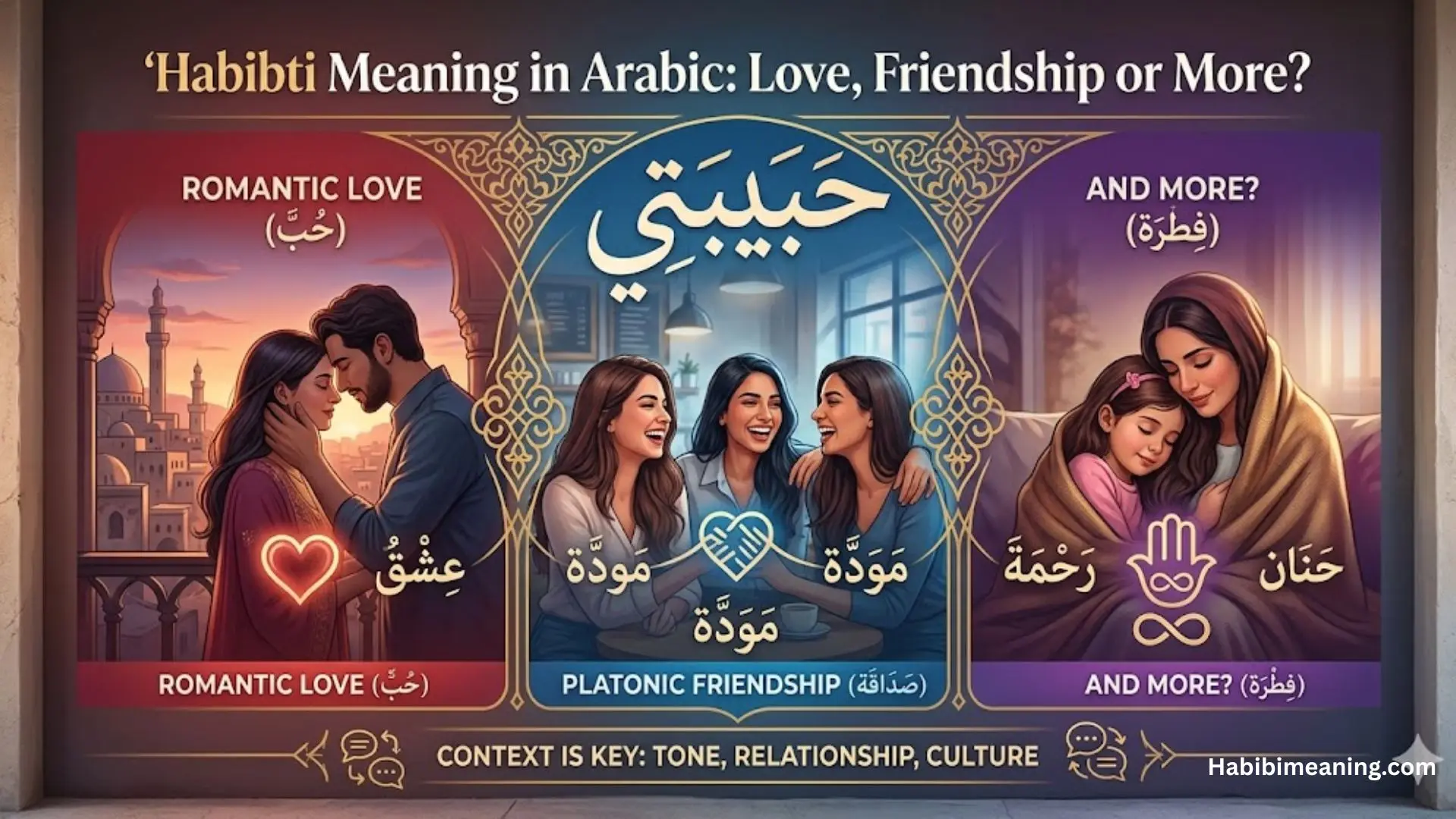
One reason the word became globally popular is because people often wonder whether habibti is romantic or friendly. The truth is that it can be both. The meaning depends completely on tone, relationship, and cultural context. In romantic relationships, habibti usually means “my love,” “sweetheart,” or “darling.” Couples commonly use it to express closeness, affection, and emotional intimacy.
People often use habibti in romantic situations such as:
- Between husband and wife
- Between boyfriend and girlfriend
- Romantic text messages
- Love songs and poetry
- Social media captions
For example:
- “I miss you, habibti.”
- “Good night, habibti.”
- “You look beautiful today, habibti.”
In these situations, the word clearly carries romantic emotion. That’s why many people searching for habibti meaning in arabic first assume it only relates to love relationships. However, Arabic culture uses affectionate words more openly than English-speaking cultures, so the word is not limited to romance alone.
Habibti between friends is also very common, especially among women. Female friends may use the word casually to show warmth, kindness, or emotional closeness. Mothers often call daughters habibti, and older relatives may lovingly use it for younger family members. In these situations, the word feels caring rather than romantic.
Common friendly or family uses include:
- Mother to daughter
- Sister to sister
- Female friends chatting
- Aunt speaking to niece
- Grandmother speaking lovingly
Context is everything in Arabic communication. Tone of voice, facial expression, and relationship all affect the meaning. In some Gulf and Levant countries, shopkeepers or older women may even use habibti politely in conversation to sound warm and welcoming. Even though the word sounds affectionate, it does not automatically mean romantic interest every time.
How to Use Habibti — Real Life Examples
Learning the meaning of a word is helpful, but knowing when to use it naturally is even more important. Habibti is commonly used in casual and emotional conversations where warmth, affection, or care is being expressed. In Arabic-speaking cultures, people use affectionate words more freely than in many Western cultures, so hearing habibti in daily conversations is very normal. The word can appear in romantic chats, family discussions, friendly conversations, songs, and even social media comments.
People usually use habibti in situations like:
- Romantic conversations
- Text messages
- Family interactions
- Friendly chats
- Compliments and greetings
- Emotional support conversations
For example, a husband may say “I love you, habibti” to his wife while a mother may call her daughter habibti in a caring tone. Female friends may also use it casually with each other, especially in countries like Lebanon, Egypt, and Syria. Because the word sounds soft and affectionate, it creates emotional warmth during conversation.
Here are some real-life examples of how habibti is used naturally:
Romantic Examples
- “Good morning, habibti.”
- “You are beautiful, habibti.”
- “I miss you so much, habibti.”
Friendly Examples
- “How are you, habibti?”
- “Come sit with us, habibti.”
- “Don’t worry, habibti. Everything will be okay.”
Family Examples
- “Eat your food, habibti.”
- “Sleep well, habibti.”
- “I’m proud of you, habibti.”
In Arabic script, one example looks like this:
- صباح الخير حبيبتي
(Good morning, my dear)
Although habibti is a beautiful expression, there are situations where you should avoid using it. Since the word carries emotional warmth, using it with strangers or in very formal environments may sound inappropriate or overly personal.
Avoid using habibti in:
- Professional business meetings
- Formal workplace communication
- Serious official conversations
- Conversations with strangers unless culturally appropriate
If you are learning Arabic, listening carefully to native speakers can help you understand the right tone and timing. Context matters a lot in Arabic communication, and emotional words often change meaning depending on voice, relationship, and situation.
Habibti in Arabic Culture & Pop Culture
The word habibti is deeply connected to Arabic culture, emotions, and daily communication. Across the Middle East and North Africa, people use affectionate expressions naturally in conversations with family, friends, and loved ones. Because of this, habibti became much more than just a vocabulary word. It represents warmth, closeness, hospitality, and emotional expression in Arab culture.
Arabic music played a huge role in making habibti famous worldwide. Many classic and modern Arabic songs include the word because it sounds emotional, poetic, and romantic. Singers often repeat habibti in choruses to express love and longing. Even non-Arabic speakers recognize the term after hearing it in popular music videos and romantic songs.
You can commonly hear habibti in:
- Arabic love songs
- Lebanese pop music
- Egyptian movies
- Turkish dramas dubbed in Arabic
- Romantic poetry
- TikTok audio trends
- Instagram captions
Social media helped the word spread globally at an even faster pace. Platforms like TikTok, Instagram, and YouTube introduced millions of users to Arabic affection words through edits, relationship videos, memes, and lifestyle content. Young audiences especially started using habibti in captions, usernames, and comments because the word sounds emotional and stylish at the same time.
For example, people often post captions like:
- “Good night, habibti ❤️”
- “Missing you, habibti.”
- “My forever habibti.”
Arab TV dramas also contributed to the popularity of the word. Romantic scenes often include emotional expressions like habibi and habibti, making viewers emotionally connect with the language even if they do not understand full Arabic sentences. Over time, the phrase became recognizable in many countries outside the Arab world, including Pakistan, India, Turkey, Indonesia, and Western countries.
Another reason for the popularity of habibti is its emotional flexibility. The word can sound romantic, caring, playful, or comforting depending on the speaker’s tone. This emotional richness makes it memorable and easy for people from different cultures to adopt naturally in online communication and entertainment culture.
Other Arabic Terms of Endearment
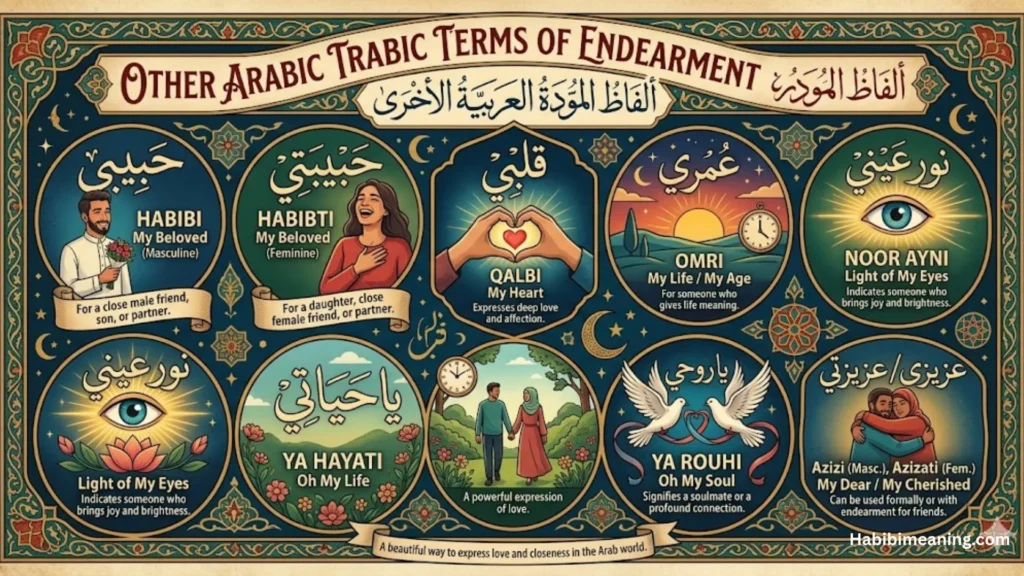
Arabic is full of beautiful and emotional expressions used to show love, care, and closeness. While habibti is one of the most popular Arabic affection words, many other terms are commonly used in romantic relationships, family conversations, and friendships. These expressions often sound poetic because Arabic language naturally uses emotional and heartfelt communication in everyday speech.
Many Arabic terms of endearment are connected to the heart, soul, life, and emotions. That’s why they feel deep and meaningful even when translated into English. Some are romantic while others are used warmly between family members and close friends. Learning these words can help you better understand Arabic culture and emotional expression.
Here are some popular Arabic affection words related to habibti:
| Arabic Term | English Meaning |
| Ya Albi / Ya Qalbi | My heart |
| Rouhi | My soul |
| Omri | My life |
| 3ayouni | My eyes |
| Habibi | My beloved (male) |
| Habibti | My beloved (female) |
Ya Albi / Ya Qalbi
This phrase means “my heart.” Arabs often use it to show deep emotional connection and care. Parents, couples, and close friends may all use it naturally in conversation.
Rouhi
Rouhi means “my soul.” It sounds deeply emotional and romantic in Arabic. Many Arabic songs and poems use this expression because it carries strong feelings of love and attachment.
Omri
Omri translates to “my life.” People often say it to someone very important to them. In romantic relationships, it can sound similar to saying “you mean everything to me.”
3ayouni
The literal meaning is “my eyes.” In Arabic culture, eyes symbolize something precious and valuable. Calling someone 3ayouni shows care, protection, and emotional closeness.
These words add richness and beauty to Arabic communication. Many Arabic speakers mix these affectionate expressions naturally in daily conversations. You may even hear several of them in the same sentence during emotional or romantic moments.
FAQs
What does habibti mean in Arabic?
Habibti means “my beloved” or “my dear” in Arabic and people usually use it affectionately for females in conversations.
Is habibti used only for girlfriends?
No, people also use habibti for daughters, sisters, female friends, and family members to show care, warmth, and affection naturally.
What is the difference between habibi and habibti?
Habibi is used for males while habibti is the feminine form used when speaking lovingly to females in Arabic language.
How do you pronounce habibti correctly?
Habibti is pronounced as “ha-bib-TEE,” with soft pronunciation and stronger emphasis placed naturally on the final syllable while speaking.
What does habibti mean in Urdu?
Habibti meaning in Urdu is “میری پیاری” or “میری محبوبہ,” expressing love, emotional closeness, affection, and warmth toward someone.
Can friends say habibti to each other?
Yes, female friends commonly use habibti casually in Arabic-speaking cultures to express friendliness, closeness, emotional warmth, and affection naturally.
Is habibti romantic or friendly?
Habibti can sound romantic or friendly depending on tone, relationship, culture, and the situation where someone uses the expression naturally.
Conclusion
Understanding the habibti meaning in arabic helps you see why this small word carries so much emotion and cultural value. Whether it means “my love,” “my dear,” or “my beloved,” habibti is more than just a translation. People use it in romantic relationships, family conversations, and even friendly chats to express warmth, care, and affection naturally.
From Arabic songs and social media to daily conversations across the Middle East, habibti remains one of the most loved Arabic terms of endearment. Once you learn its meaning, pronunciation, and cultural use, the word becomes much easier to understand and use respectfully. If you enjoy learning emotional Arabic expressions, habibti is a beautiful place to start.



Leave a Reply